
Whole-House Surge Protection: Guarding New Orleans Homes Against Storm-Season Power Surges
Whole-house surge protection combines a panel-mounted surge device with point-of-use protection at critical electronics. This layered system defends against external surges from lightning and utility switching, plus internal surges from motor loads. For New Orleans homes facing storm season and frequent restoration surges, this two-tier approach protects your panel and valuable equipment.
What Is an Electrical Surge?
An electrical surge is a temporary spike in voltage that travels through your home’s wiring. Surges last just microseconds but carry enough energy to damage or destroy electronic components. Your home experiences surges from two main sources. External surges arrive from outside the home, primarily from lightning strikes near power lines and from utility companies switching equipment to restore service after storm outages. Internal surges happen inside your home when large appliances with motors, like air conditioning compressors or refrigerator compressors, cycle on and off, creating temporary voltage changes throughout your electrical system.
Why Your New Orleans Home Needs Surge Protection
The Gulf Coast location and seasonal weather patterns create unique surge risks. Storm season brings lightning activity, and when storms knock out power, the surge that follows as the utility restores service can spike through your panel into every circuit. Even if lightning doesn’t strike your home directly, nearby strikes on power lines send surges through the grid and into your wiring. Beyond weather, daily post-outage restoration cycles and the normal operation of modern high-demand appliances generate internal surges that, over time, degrade electronics without your knowledge. Protecting your panel and devices means avoiding expensive repairs or replacements of TVs, computers, smart home systems, and appliances.
The Two-Layer Protection Approach
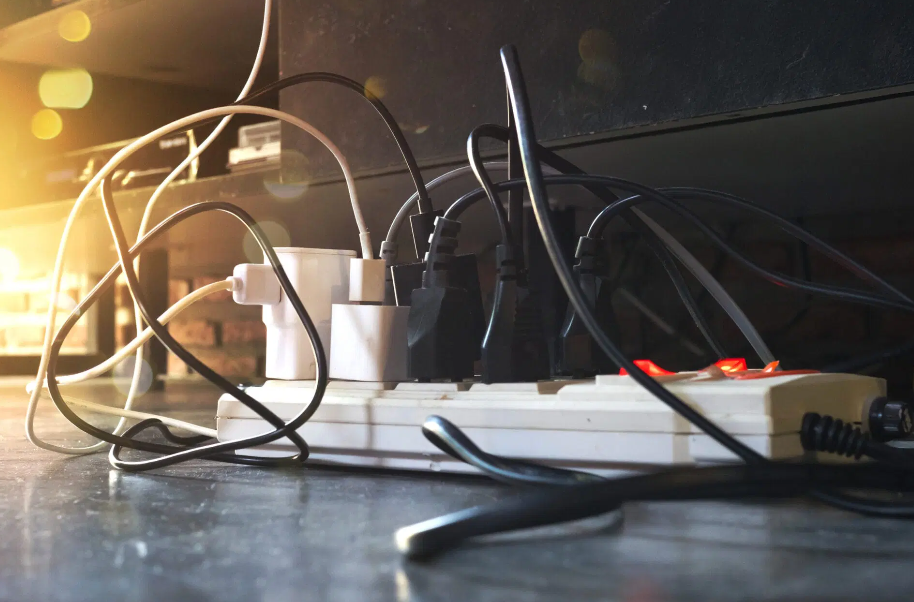
Effective surge protection uses two layers. The first layer is a surge protective device installed at your main electrical panel or service entrance. This device, often called a whole-house surge protector, intercepts surges before they distribute throughout your home’s circuits. It works like a pressure relief valve, shunting excess voltage to ground when surge voltage exceeds safe limits. The second layer consists of surge-protected power strips or individual surge protective devices installed at outlets where sensitive equipment lives, like your computer workstation, entertainment system, and smart home hub. These point-of-use devices catch surges that slip past the first layer or originate from internal loads on the same circuit. A power strip alone, without surge protection circuitry, offers no defense. Confusing a basic power strip with surge protection is a common mistake that leaves electronics vulnerable.
The Critical Role of Grounding and Bonding
Surge protective devices work only if your home’s grounding and bonding systems are correct. Grounding provides the low-resistance path that surges must follow to dissipate safely into the earth. If grounding is incomplete or corroded, a surge device cannot function effectively. Your ELECTRICIAN will verify that the main ground wire from your panel connects properly to a ground rod or grounding electrode, and that all necessary bonding connections are in place at the service entrance. Without solid grounding, even an expensive surge device fails to protect your home. This is why a licensed electrician should inspect your existing grounding before installing a whole-house surge protective device.
Protecting Today’s Vulnerable Electronics
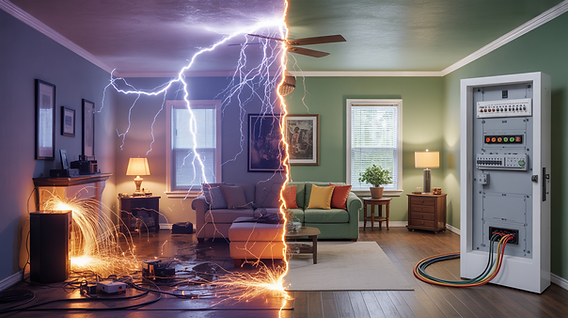
Modern homes contain electronics that are far more sensitive to surges than older equipment. Mini-split air conditioner inverters, LED lighting drivers, smart electrical panels, variable-frequency drives in well pumps and sump pumps, and networked home office equipment are all at risk. A single surge can damage the control circuits in these devices, leaving them inoperable. Whole-house surge protection paired with point-of-use devices dramatically reduces these risks. Every outlet where you plug in sensitive gear benefits from the layered approach.
Monitoring and Replacing Your Surge Protection
Most surge protective devices include indicator lights that show whether protection is active. Check these lights monthly and read any documentation provided with your device to understand what each light means. Over time, surge protective devices accumulate damage from small surges and eventually reach end-of-life. When the indicator light changes or goes dark, or if your device shows visible damage, replacement is necessary. A device that has absorbed surges is no longer protecting you. Document the date your device was installed and plan for replacement every few years or sooner if you experience nearby lightning or frequent power outages.
Frequently Asked Questions
Will a surge protective device increase my electric bill?
No. A surge protective device draws negligible power and does not affect your monthly consumption. It sits dormant until a surge arrives, at which point it activates briefly and then returns to standby mode. Installing one does not change your electrical usage.
Can I install a whole-house surge protective device myself?
A whole-house surge protective device requires connection to your main electrical panel, which involves working with live electrical circuits. This work must be done by a licensed electrician and typically requires a permit and final inspection by the local authority. DIY installation risks electrocution and code violations.
Do I need surge protection if my utility company has surge protection on power lines?
Utility-level protection is designed to protect the utility’s equipment and infrastructure, not your home or appliances. Local surges from lightning or internal motor loads still reach your home. Homeowner-installed surge protection at the panel and at individual outlets is your responsibility and is essential for protecting your property.
About MK Electric Man
MK Electric Man is a licensed electrical contractor serving the New Orleans area, including Chalmette, Metairie, Kenner, Jefferson Parish, and St. Tammany Parish. We specialize in surge protection installation, panel upgrades, grounding correction, and code-compliant electrical work.
